Complete Stock Market Guide for Beginners India 2026
Stock Market kya hai, NSE-BSE kaise kaam karta hai, Technical Analysis, Trading Strategies, Risk Management — ye sab ek hi jagah, bilkul free, simple Hindi & English mein.
🚀 Stock Market kya hai?
Stock Market — ye naam sunke bahut logon ke mann mein ek hi cheez aati hai: "paisa banana" ya "paisa doobna". Lekin actually stock market kya hai, ye bohot kam log samajhte hain.
Simple words mein samjhein — Stock Market ek aisa marketplace hai jahan companies apne shares (ownership ke chhote-chhote hisse) publicly sell karti hain, aur investors un shares ko buy aur sell karte hain.
Socho tumhara ek dost hai jisne ek shop kholi. Ab wo chahta hai ki shop expand kare, lekin uske paas paisa nahi. Toh wo 100 log dhundhta hai aur unhe apni shop ka 1-1% ownership deta hai ₹10,000 ke badले mein. Yahi kaam Stock Market mein hota hai — bas scale bahut bada hota hai.
Jab tum kisi company ka share kharidtey ho, toh tum us company ke ek chhote se hissedar (shareholder) ban jaate ho. Company grow kare toh tumhara share ka value badhega. Company kharab kare toh tumhara paisa kam hoga.
Yahi reason hai ki stock market mein knowledge, strategy, aur patience — teen cheezein sabse important hain. Bina in teen ke trading karna gambling ke barabar hai.
📜 India mein Stock Market ki History
Bahut log sochte hain ki Stock Market koi nayi cheez hai. But actually India mein stock market ki history 150+ saal purani hai.
🏛️ BSE — Asia ki Sabse Purani Stock Exchange
Bombay Stock Exchange (BSE) ki sthapna 1875 mein hui thi. Ye Asia ki sabse purani stock exchange hai. Pehle trading Banyan tree ke neeche hoti thi Mumbai ke Town Hall ke paas — aur yahi se Indian stock market ki kahani shuru hui.
💻 NSE — Modern Electronic Trading
National Stock Exchange (NSE) 1992 mein establish hua aur India mein fully electronic trading system laaya. Ye ek revolution tha — ab koi bhi ghar se trading kar sakta tha.
1875 – BSE founded | 1992 – NSE launched | 1996 – Dematerialization shuru | 2000 – Online trading started | 2010+ – Mobile trading era | 2020 – COVID ke baad retail traders boom
2020 ke baad se India mein retail traders ki sankhya dramatically increase hui hai. Crores of new Demat accounts khule hain. Lekin sath mein losses bhi bahut hue — kyunki knowledge ke bina trading ki gayi.
⚔️ NSE vs BSE — Kya Farq Hai?
India mein do major stock exchanges hain — NSE aur BSE. Beginners ka common confusion hota hai ki dono mein kya difference hai aur kahan trade karein.
| Feature | NSE | BSE |
|---|---|---|
| Full Name | National Stock Exchange | Bombay Stock Exchange |
| Founded | 1992 | 1875 |
| Index | Nifty 50 | Sensex (BSE 30) |
| Listed Companies | ~2000+ | ~5500+ |
| Volume/Liquidity | ✅ Higher (F&O trading) | ⚠️ Lower |
| F&O Trading | ✅ Very Active | ⚠️ Limited |
| Best For | Intraday, F&O, Active Trading | Long term investing |
Agar tum abhi sirf seekhna chahte ho toh NSE se shuru karo. Nifty 50 aur Banknifty pe focus karo. Ye most liquid hain aur sabse zyada information available hai.
📈 Nifty 50 aur Sensex kya hote hain?
Nifty 50 ek index hai jo India ki top 50 companies ka performance track karta hai. Agar Nifty oopar gaya matlab overall market bullish hai. Agar Nifty neeche gaya matlab market bearish mood mein hai.
Sensex BSE ka index hai jo top 30 companies track karta hai. Broadly dono same direction mein move karte hain.
"Nifty oopar gaya" ka matlab ye nahi ki har stock oopar gaya — index sirf top companies ka average hai."
⚙️ Stock Market Kaise Kaam Karta Hai?
Bahut simple logic hai — Demand aur Supply.
📈 Price Kyun Badhti Hai?
Jab ek stock ko buy karne wale zyada hote hain aur sell karne wale kam — price oopar jaati hai. Ye tab hota hai jab company ka news achha ho, earnings badi ho, ya market bullish ho.
📉 Price Kyun Girti Hai?
Jab sell karne wale zyada hote hain aur buyers kam — price neeche jaati hai. Ye tab hota hai jab bad news ho, earnings disappointing ho, ya overall market mein panic ho.
🔄 Trading ka Process — Step by Step
Order Place Karo
Tum apne broker app (Zerodha, Upstox etc.) pe jaate ho aur kisi stock ka buy/sell order place karte ho — market order ya limit order.
Exchange Match Karta Hai
NSE/BSE ka matching engine tumhare buy order ko kisi sell order se match karta hai. Ye milliseconds mein hota hai.
Settlement Hoti Hai
Trade execute hone ke baad T+1 settlement hoti hai — matlab kal shares tumhare Demat account mein aayenge aur paisa transfer hoga.
Profit/Loss Book Hota Hai
Jab tum sell karte ho, purchase price aur selling price ka difference tumhara profit ya loss hota hai — minus brokerage aur taxes.
🕐 Market Timing — India
Pre-opening Session: 9:00 AM – 9:15 AM | Regular Market: 9:15 AM – 3:30 PM | Post-closing: 3:40 PM – 4:00 PM | Monday to Friday (holidays except)
🏦 Market ke Types — Primary vs Secondary
🆕 Primary Market (IPO)
Jab koi company pehli baar public ko shares issue karti hai — use IPO (Initial Public Offering) kehte hain. Ye Primary Market hai. Yahan company seedha investors ko shares deti hai.
🔄 Secondary Market (Trading)
IPO ke baad jo shares stock exchange pe list hote hain — unki trading Secondary Market mein hoti hai. Ye wahi market hai jo hum daily chart pe dekhte hain — NSE, BSE.
🐂 Bull Market vs 🐻 Bear Market
Stock market ki ek bahut important terminology ye hai. Ye terms bahut common hain par beginners confuse hote hain.
🐂 Bull Market
Jab market lamba time oopar ja raha ho — prices consistently rising hoon — use Bull Market kehte hain. Bull oopar attack karta hai isliye naam Bull Market. 2020-2021 ek classic bull market tha India mein.
🐻 Bear Market
Jab market lamba time neeche ja raha ho — 20%+ decline — use Bear Market kehte hain. Bear panja neeche maarta hai isliye naam Bear Market. 2008 financial crisis ek bada bear market tha.
🏦 Demat Account Kaise Kholein?
Trading shuru karne ke liye sabse pehle ek Demat + Trading Account chahiye hota hai. Demat account woh jagah hai jahan tumhare shares digitally store hote hain — bilkul bank account ki tarah.
Demat Account — shares store karne ke liye (jaise bank locker) | Trading Account — shares buy/sell karne ke liye (jaise bank current account). Dono milkar kaam karte hain.
Popular Brokers India mein:
⚡ Discount Brokers
Zerodha, Upstox, Angel One, Groww — kam brokerage, online process, beginners ke liye best. Most popular choice India mein.
🏛️ Full Service Brokers
HDFC Securities, ICICI Direct, Motilal Oswal — zyada services, advisory, lekin brokerage thoda zyada hota hai.
Account Kholne ke Steps:
PAN Card zaroori hai
Bina PAN card ke Demat account nahi khul sakta. Agar nahi hai toh pehle PAN apply karo.
Broker choose karo
Beginner ke liye Zerodha ya Groww best hai. Simple interface aur good educational resources.
KYC complete karo
Aadhaar, PAN, bank details, signature, selfie — sab online submit karo. 24-48 hours mein account activate ho jaata hai.
Fund Add karo
Bank account se paise transfer karo. Iske baad tum trading shuru kar sakte ho. Lekin seedha real trading mat karo — pehle practice karo!
Account kholte hi real money se trading mat karo. Pehle virtual trading se practice karo. BullBear Market pe practice karo — bilkul free hai, real risk zero hai.
📈 Types of Trading — Kaunsa Best Hai?
Trading ek hi cheez nahi hai — iske kai alag-alag types hain. Har type ka apna time frame, risk level, aur skill requirement hota hai. Beginner ke liye galat type choose karna ek badi mistake ho sakti hai.
1. 🕐 Intraday Trading (Day Trading)
Same day ke andar buy aur sell — market close hone se pehle. Isi ko intraday ya day trading kehte hain.
Fast decisions chahiye. Market ko closely monitor karna padta hai. Beginners ke liye zyada risky. Daily profit potential zyada, lekin losses bhi fast hote hain.
2. 🔄 Swing Trading
Kuch din se kuch hafte tak trade hold karna. Ye beginner ke liye zyada suitable hai kyunki thoda zyada time milta hai decision lene ke liye.
Daily screen time kam chahiye. Technical analysis use hota hai entries aur exits ke liye. Beginners ke liye recommended starting point.
3. 📆 Long Term Investing (Positional)
Mahino ya salon tak stocks hold karna — fundamental analysis ke basis par. Warren Buffett is style ke master hain.
Patience sabse bada skill hai. Fundamentally strong companies mein invest karo aur time do grow karne ka. SIP bhi is category mein aata hai.
4. ⚡ Scalping
Minutes mein chhote-chhote profits book karna — bahut saari trades karna ek din mein. Expert traders ka game hai.
5. 📊 F&O Trading (Futures & Options)
Ye advanced trading hai derivatives mein. Bohot high leverage, bohot high risk. Bilkul beginner ke liye nahi. Pehle 1-2 saal practice karo tab socho.
| Type | Time Frame | Risk | Beginner? |
|---|---|---|---|
| Scalping | Minutes | Very High | ❌ No |
| Intraday | Same Day | High | ⚠️ After Practice |
| Swing Trading | Days–Weeks | Medium | ✅ Yes |
| Long Term | Months–Years | Lower | ✅ Yes |
| F&O | Any | Very High | ❌ No |
📊 Technical Analysis — Chart Padhna Seekho
Technical Analysis ka matlab hai — price charts aur patterns ke through ye samajhna ki price aage kahan ja sakti hai.
Bahut log sochte hain ki technical analysis rocket science hai. Actually nahi hai. Iska basic concept simple hai: "History repeats itself." Price patterns baar-baar repeat hote hain kyunki human behavior baar-baar repeat hota hai — greed, fear, hope.
"Technical analysis charts mein price ke behavior ko padh ke probability-based decisions lene ki kala hai — certainty nahi, probability."
📐 Support & Resistance — Foundation
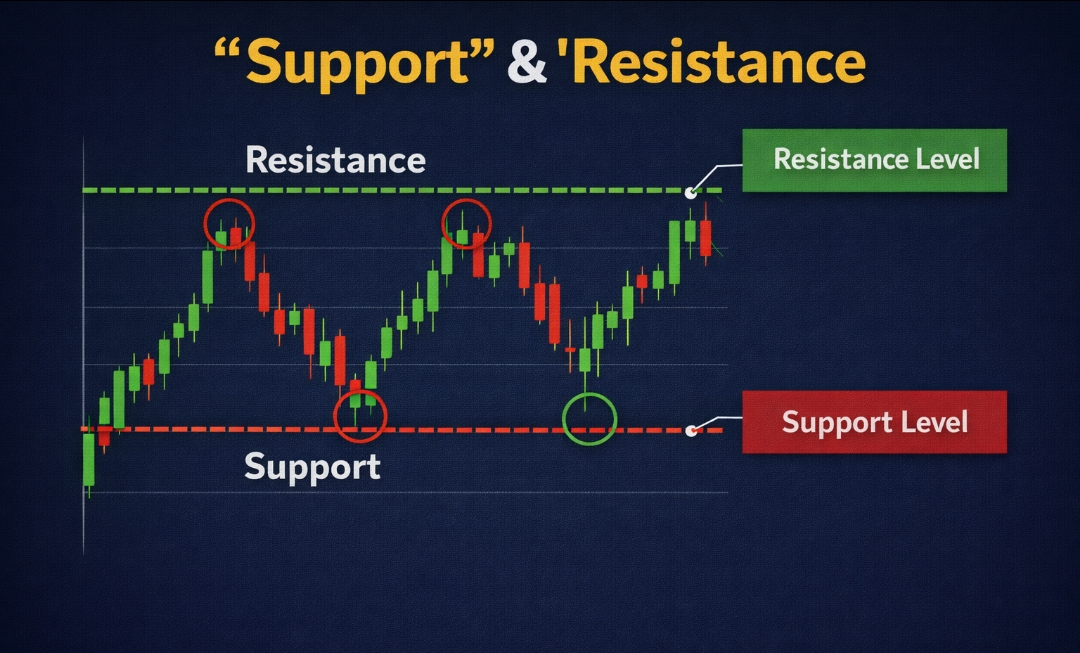
Support woh price level hai jahan buyers strong ho jaate hain aur price neeche girana stop ho jaata hai — price ka floor.
Resistance woh price level hai jahan sellers strong ho jaate hain aur price oopar jaana stop ho jaata hai — price ki ceiling.
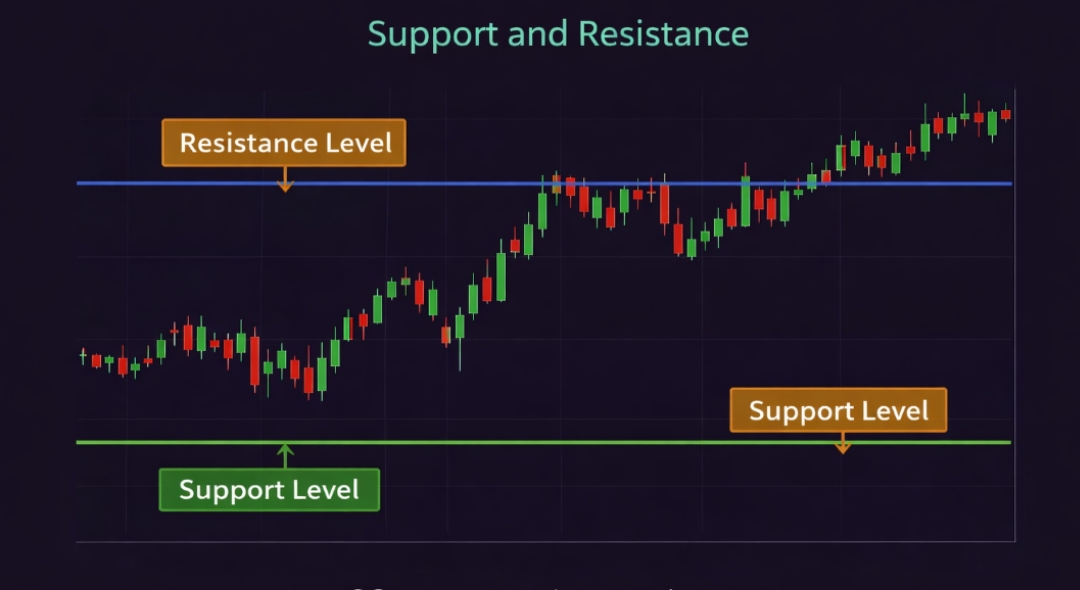
Ek important baat: Support toot jaaye toh wo naya Resistance ban jaata hai, aur Resistance toot jaaye toh wo naya Support ban jaata hai. Ise "Role Reversal" kehte hain.
📈 Trend Lines
Trend line draw karne se hum market ka overall direction samajh sakte hain — oopar ja raha hai (uptrend), neeche ja raha hai (downtrend), ya sideways chal raha hai (consolidation).
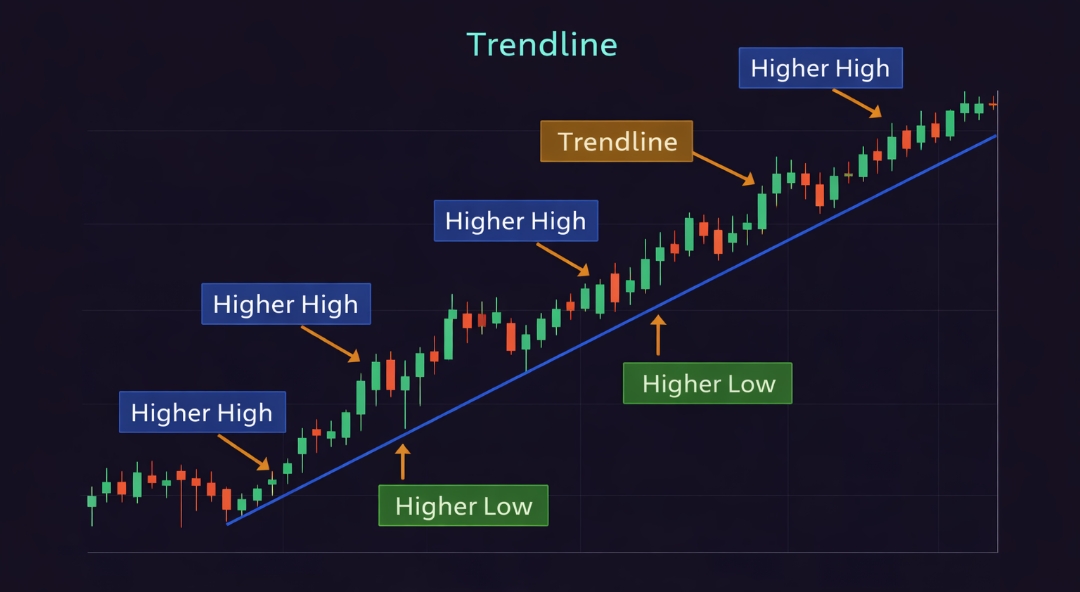
Ek simple rule: Trend ke saath trade karo, trend ke against nahi. "Trend is your friend" — ye trading ki golden saying hai.
🕯️ Candlestick Patterns — Market ki Language
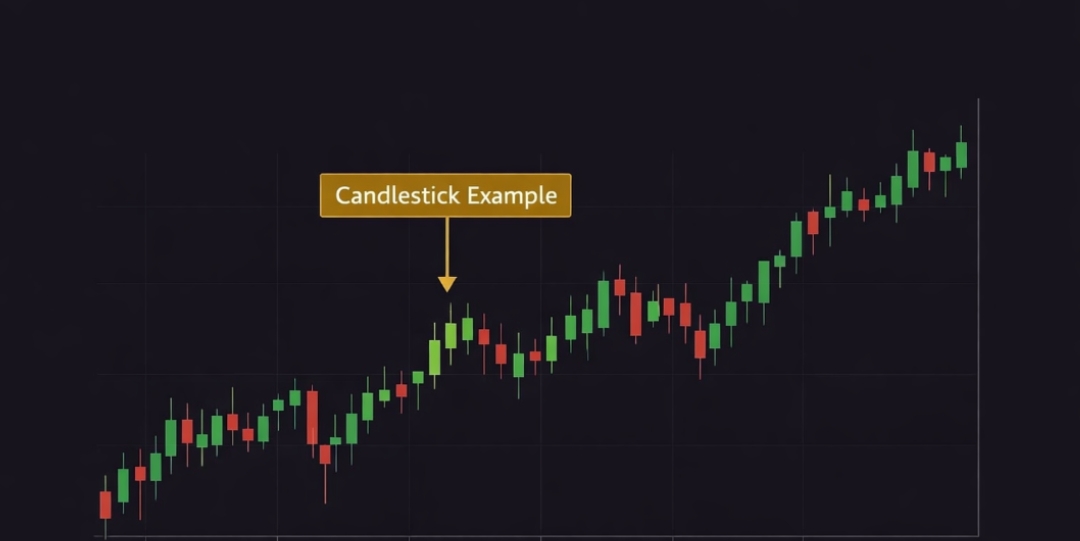
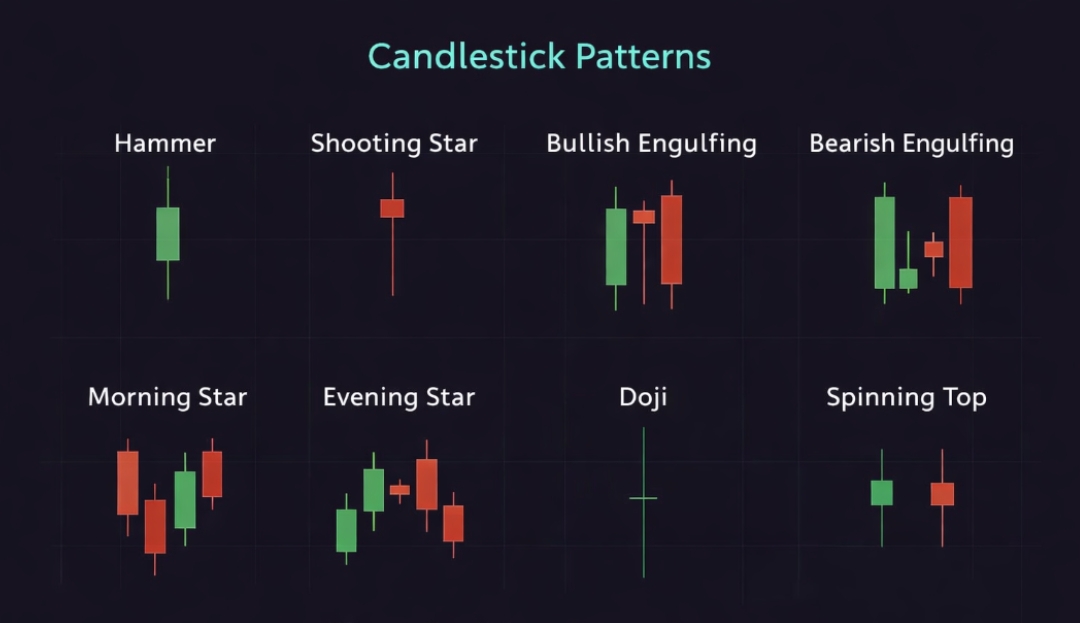
Candlestick patterns trading ki language hain. Har candle ek time period ka complete data dikhata hai — Open, High, Low, Close (OHLC).
🟢 Green Candle (Bullish)
Jab Close > Open hota hai — matlab buyers ne day control kiya. Price oopar close hui. Bullish signal.
🔴 Red Candle (Bearish)
Jab Close < Open hota hai — matlab sellers ne control kiya. Price neeche close hui. Bearish signal.
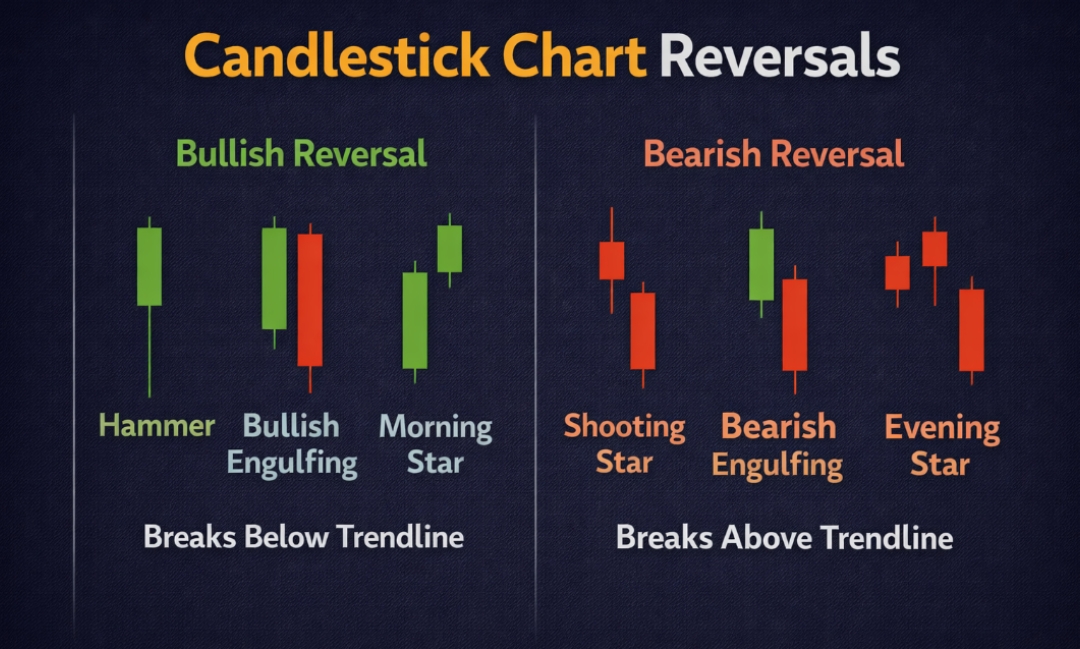
Most Important Patterns:
Hammer — Bullish Reversal
Chhoti body, lambi lower wick. Downtrend ke baad support par bane toh strong buy signal. Buyers ne sellers ko push back kar diya.
Doji — Indecision
Open aur Close almost same. Market indecision mein hai — buyers aur sellers equal hain. Confirmation ka wait karo.
Bullish Engulfing — Strong Signal
Pehli red candle ko doosri green candle completely engulf kare. Sबसे powerful reversal signal. Sellers se buyers ne control chheena.
Shooting Star — Bearish Reversal
Chhoti body, lambi upper wick. Uptrend ke baad resistance par bane toh sell signal. Sellers ne buyers ko push back kar diya.
Sirf pattern dekhkar trade mat lo. Pattern + Location (Support/Resistance) + Confirmation — teeno milne par hi trade lo. Akela pattern reliable nahi hota.
📉 Indicators — Trading ka Brain
Indicators mathematical calculations hain jo price, volume aur time ke basis par kaam karte hain. Ye tumhein confirmation dete hain ki trend strong hai ya weak, market overbought hai ya oversold.
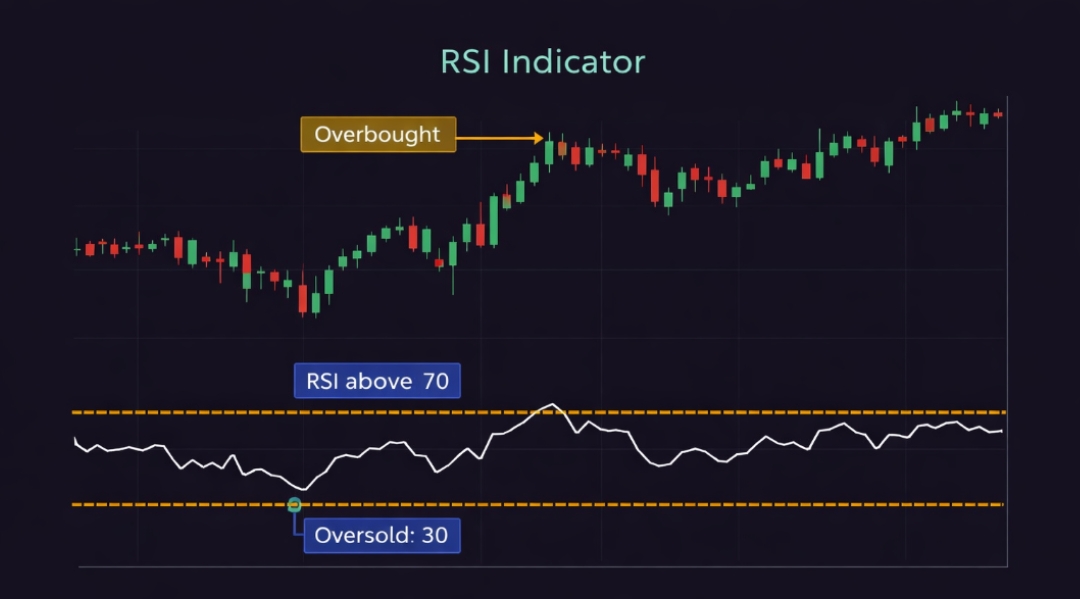
📊 RSI — Relative Strength Index
RSI 0 se 100 ke beech move karta hai. Ye batata hai ki market overbought hai (mahanga) ya oversold (sasta).
📈 RSI > 70 — Overbought
Market bahut tezi se bada hai. Reversal ya correction aa sakti hai. Lekin strong trend mein RSI 70+ pe bhi reh sakta hai lamba time.
📉 RSI < 30 — Oversold
Market bahut zyada gir gaya hai. Bounce back ho sakta hai. Lekin downtrend mein RSI 30 se neeche bhi reh sakta hai.
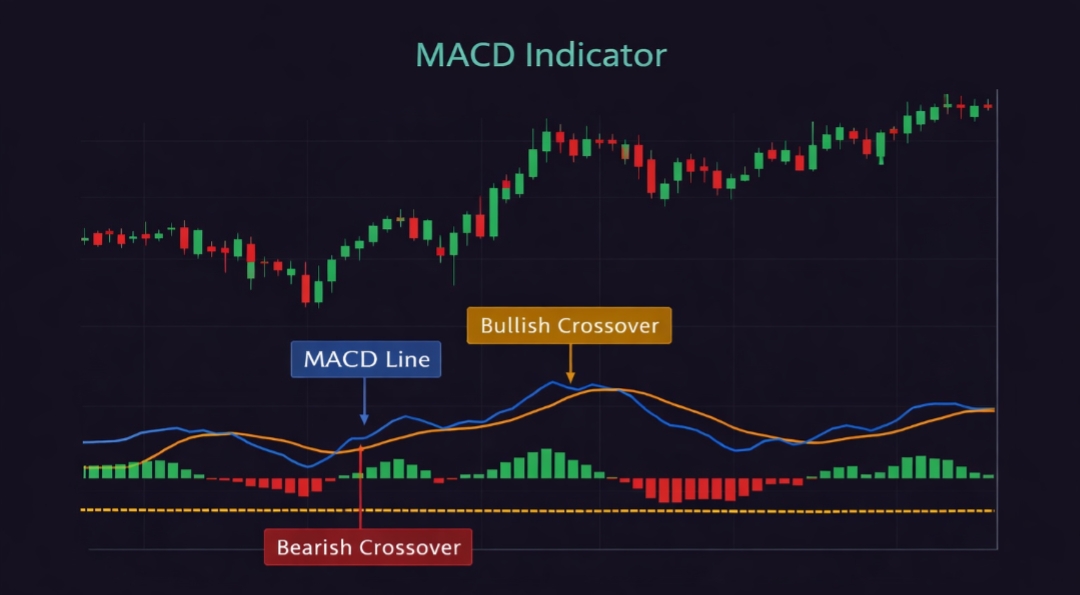
📊 MACD — Moving Average Convergence Divergence
MACD ek powerful indicator hai jo trend aur momentum dono dikhata hai. Iske teen components hain — MACD Line, Signal Line, aur Histogram.
MACD Line, Signal Line ko oopar se cross kare → Bullish Signal (Buy) | MACD Line, Signal Line ko neeche se cross kare → Bearish Signal (Sell)
📈 Moving Average (MA/EMA)
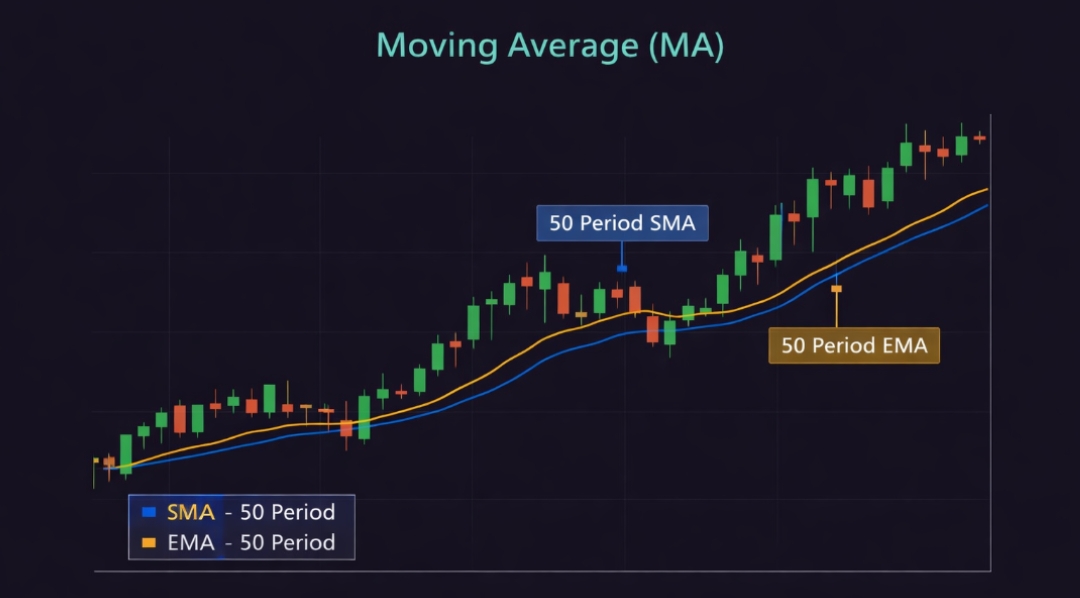
Moving Average price ka smooth average nikalta hai. Trend identify karna ka sabse simple aur effective tarika. EMA (Exponential Moving Average) zyada popular hai kyunki ye recent prices ko zyada weight deta hai.
📊 Bollinger Bands
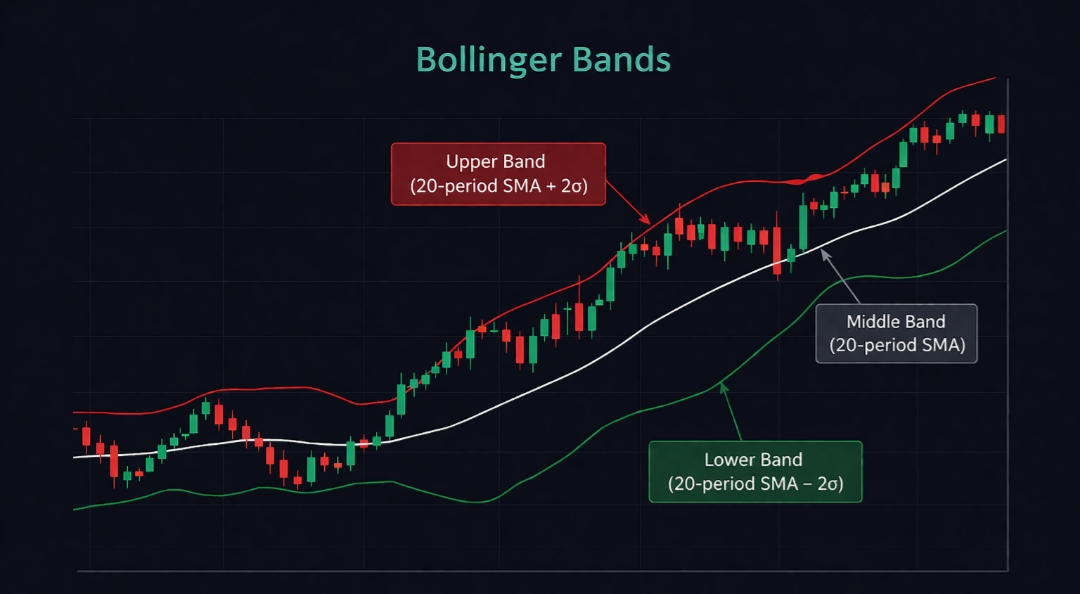
Bollinger Bands teen lines hote hain — ek middle band (20-day MA) aur uske oopar-neeche do bands jo volatility dikhate hain. Jab bands squeeze hote hain, badi movement aane wali hoti hai.
Ek indicator pe depend mat karo. Combination use karo: Trend ke liye MA, Momentum ke liye RSI, Confirmation ke liye MACD. Jab teeno agree karein tab trade lo.
🔬 Fundamental Analysis — Company ki Asli Value
Technical analysis price charts pe focus karta hai, jabki Fundamental Analysis company ke actual business ko analyse karta hai — uski earnings, debt, growth prospects.
Key Fundamentals jo Dekhne Chahiye:
P/E Ratio (Price to Earnings)
Company ki share price ko uski earnings se divide karo. Low P/E ka matlab stock sasta ho sakta hai. High P/E ka matlab ya to overvalued hai ya growth expectations high hain.
EPS (Earnings Per Share)
Company ki net profit ko total shares se divide karo. EPS badhna achha sign hai — company zyada profitable ho rahi hai.
Debt-to-Equity Ratio
Company ka kitna kaam debt se chalta hai. High debt risky hota hai. Debt-free ya low debt companies zyada safe hoti hain long term mein.
Revenue Growth
Company ka revenue (total income) consistently badh raha hai ya nahi. Consistent revenue growth ek healthy business ka sign hai.
Agar tum long-term investing karna chahte ho toh fundamental analysis seekho. Agar short-term trading mein interest hai toh technical analysis pe focus karo. Dono ka combination ideal hai.
🛡️ Risk Management — Trading ka Golden Rule
Trading mein bahut log loss karte hain kyunki unhe risk management nahi aata. Achha strategy hona aur achha risk management hona — dono equally important hain.
"Trading mein survive karna hi sabse badi jeet hai. Jo survive karta hai, wo eventually seekhta hai aur profitable banta hai."
🔑 Golden Rules of Risk Management:
1-2% Rule — Capital Per Trade
Ek trade mein apne total capital ka maximum 1-2% risk karo. Agar ₹1 lakh hai toh ek trade mein maximum ₹1,000-₹2,000 risk. Bada trade ek baar mein account blow kar deta hai.
Stop Loss — Non-Negotiable
Har trade mein Stop Loss mandatory hai. Stop Loss se pehle trade mat lo. No Stop Loss = Gambling. Stop loss wo level hai jahan tum loss accept karke niklo zyada loss se bachne ke liye.
Risk:Reward — Minimum 1:2
Agar tum ₹100 risk kar rahe ho toh target minimum ₹200 hona chahiye. Is se agar 50% trades bhi sahi ho toh profitable raho ge. Quality trades lo, quantity nahi.
Overtrading Avoid Karo
Zyada trades = zyada risk aur zyada brokerage. Best traders din mein 2-3 quality trades lete hain, 20-30 nahi. Patience ek trader ka sabse bada skill hai.
Trading Journal Rakho
Har trade record karo — entry, exit, reason, outcome. Journal dekhkar apni mistakes samjho aur improve karo. Professional traders ye zaroori karte hain.
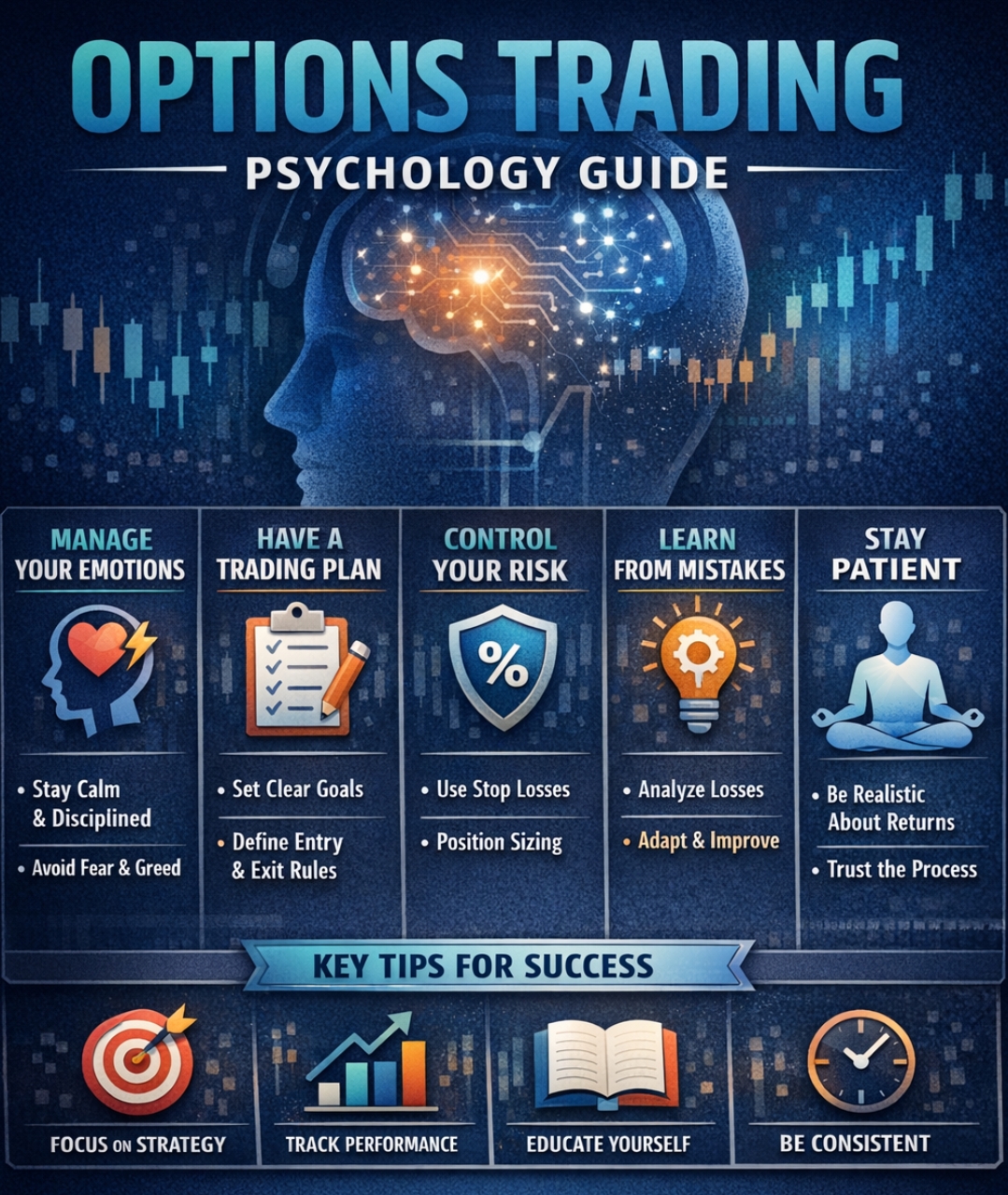
🧠 Trading Psychology — Sabse Important Skill
Ye mat socho ki trading sirf numbers ka khel hai. Actually trading 70% psychology hai aur 30% strategy. Bahut traders ke paas achha strategy hota hai, phir bhi wo lose karte hain — kyunki unki psychology weak hoti hai.
😰 Fear (Dar) — Sabse Bada Dushman
Dar se trader do galtiyan karta hai:
- Jaldi exit — thoda profit dekh ke becha deta hai, target tak nahi jaane deta
- Entry nahi lena — achha setup hone par bhi trade nahi le paata
🤑 Greed (Lalach) — Doosra Bada Dushman
Greed se trader:
- Target baar-baar badha deta hai — "thoda aur badhne do"
- Winning trade mein Stop Loss nahi laata
- Ek baar profit aaya toh zyada risk leta hai agli trade mein
😤 FOMO — Fear of Missing Out
Market mein kuch bada move aaya aur tum miss kar gaye — ab bina sochे entry le lete ho. Ye FOMO hai. FOMO trading mein bahut zyada loss hota hai kyunki entry galat time par hoti hai — jab move already ho chuka hota hai.
Emotions ko control karna impossible hai — control karo mat. Bas ek pre-defined process banao aur usse follow karo. Entry rules, exit rules, stop loss — sab pehle se decide karo. Process follow karo, emotions nahi.
😡 Revenge Trading — Worst Mistake
Loss hua toh turant agle trade mein wapas kamane ki koshish karna — ye Revenge Trading hai. Ye aapko aur bade loss mein le jaata hai. Loss hone ke baad screen se dur ho jao, kuch time ke liye.
❌ Common Mistakes — Jo Beginners Karte Hain
Real Money se Seedha Shuru Karna
Bina practice ke real money lagana — ye sabse badi galti hai. Pehle virtual trading practice karo. BullBear Market pe practice karo — zero risk.
Tips Follow Karna — YouTube/Telegram
Koi bhi channel/group jo "guaranteed profit" ya "100% sure shot tips" dene ka claim kare — wo fraud hai. Trading mein koi guaranteed result nahi hota.
Bahut Saare Indicators Use Karna
Zyada indicators = zyada confusion. 2-3 indicators kaafi hain. Simple is better. Indicator overload se analysis paralysis ho jaata hai.
F&O mein Seedha Ghusna
Options/Futures beginners ke liye nahi hain. Ye highly leveraged hote hain — account ek din mein zero ho sakta hai. Pehle cash trading seekho, saalon baad F&O socho.
Stop Loss Nahi Laana
"Wapas aajaayega" — ye soch ke stop loss nahi laate. Kabhi kabhi stock wapas nahi aata aur bada loss ho jaata hai. Stop Loss = Insurance.
News pe Blindly Trade Karna
News aane par toh market already move kar chuka hota hai. "Buy on rumour, sell on news" — jab news aayi, professionals pehle hi exit kar chuke hote hain.
🗺️ Beginner to Pro Roadmap — Step by Step
Ab sab kuch seekh liya — lekin shuru kahan se karein? Ye roadmap follow karo:
Month 1-2 — Foundation Seekho
Stock market basics, NSE/BSE, Demat account concept, types of trading, candlestick basics, support-resistance. BullBear Market ke learning modules complete karo.
Month 3-4 — Technical Deep Dive
RSI, MACD, Moving Average, Bollinger Bands, chart patterns properly seekho. Har indicator ko practice mein use karo — charts pe khud se identify karo.
Month 5-6 — Virtual Trading Practice
Ek strategy banao aur BullBear Market pe virtual trading karo. Har trade note karo — journal rakho. Galtiyan dhundho aur sudharo.
Month 7-9 — Backtesting aur Refinement
Past charts pe apni strategy test karo. Win rate aur risk-reward dekho. Strategy refine karo. Leaderboard contests mein participate karo BullBear pe.
Month 10-12 — Real Market Preparation
Agar 6+ mahine ki virtual trading mein consistently profitable raho, tab chhoti capital se real trading start karo. Seedha bada amount mat lagao.
Knowledge + Practice + Discipline + Patience = Trading Success — koi shortcut nahi hai. Jo time deta hai, wo results paata hai.
🚀 Practice Karo — BullBear Market Pe Free
Jo kuch aaj seekha — use practice karo virtual trading mein. Real money ka zero risk. Weekly contests mein participate karo aur rewards jeeto.
📚 Full Learning Hub 📖 More Articles